OH-FEEL Hydroxyl Technology: A Cleaner Air Solution for Cruise Ships and Yachts
1. Why Marine Spaces Need Active Air Treatment
Cruise ships and yachts are enclosed or semi-enclosed environments with high humidity, dense passenger flow, and continuous use of air-conditioning systems. Cabins, corridors, restaurants, bars, restrooms, galleys, storage rooms, and areas around engine rooms can easily accumulate odors, moisture, mold, VOCs, bacteria, and other air-quality concerns.
For premium marine environments, air quality is not only a comfort issue. It directly affects guest experience, complaint rates, vessel hygiene, and brand image.
2. The Challenge: Odors Are Often Hidden in Surfaces and Ducts
Marine odors are rarely caused by a single source. Musty odor may come from carpets, curtains, mattresses, leather, wood trim, closets, air outlets, or damp corners. Restrooms and sewage-adjacent areas may create ammonia or backflow odors. Restaurants and galleys add food, smoke, heat-related, and waste odors.
Traditional ventilation, fragrances, HEPA filtration, or short-term ozone treatment can help in specific situations, but they may not provide continuous air-and-surface treatment across cabins, soft furnishings, and hidden odor sources.
3. How OH-FEEL Hydroxyl Technology Works
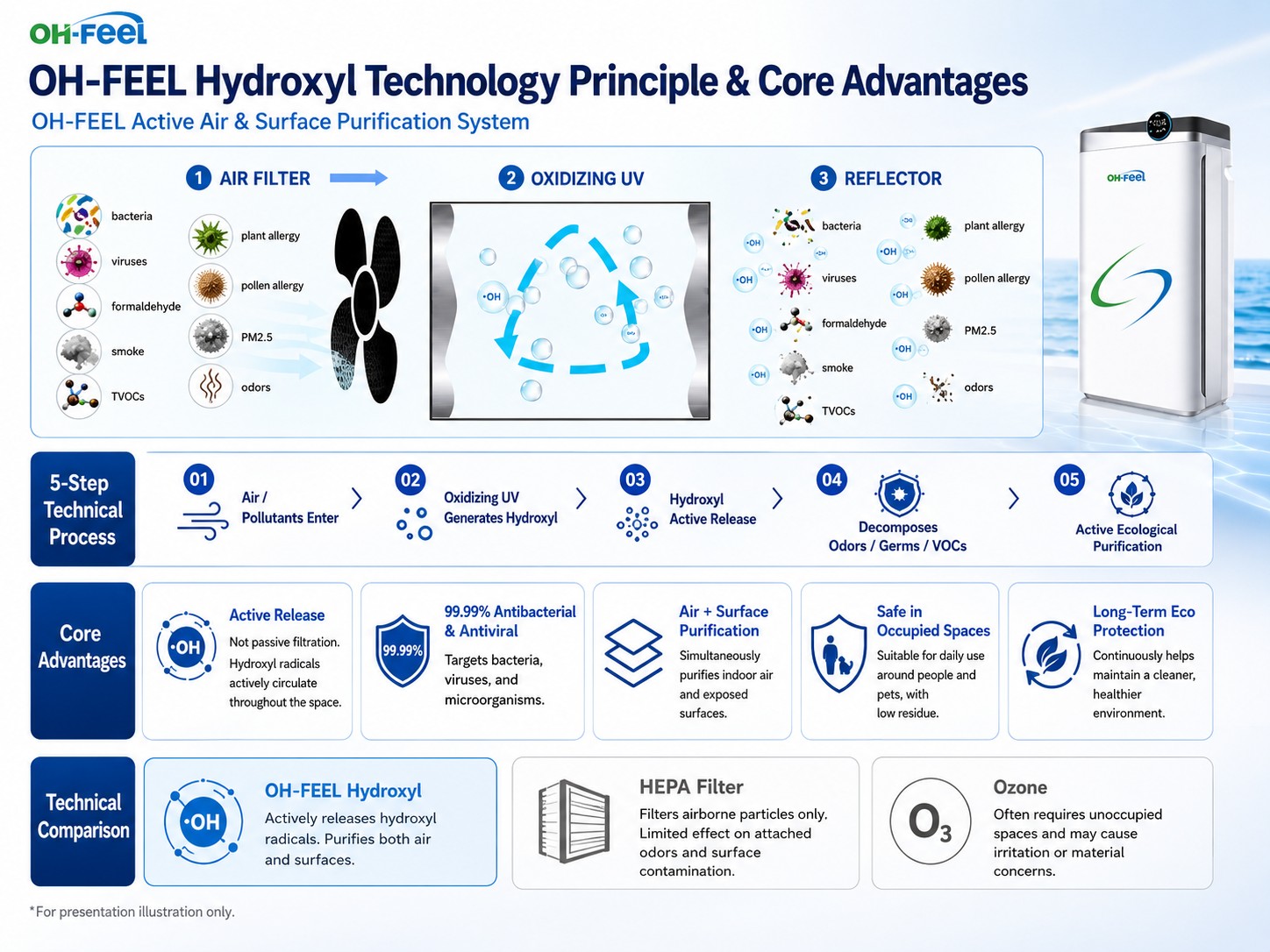
OH-FEEL uses hydroxyl radical technology inspired by nature's self-cleaning process. Hydroxyl radicals (·OH) are highly reactive natural cleansing factors. Instead of waiting for pollutants to pass through a filter, OH-FEEL actively releases purification factors into the space to help oxidize and break down airborne and surface contaminants.
The system is designed to support treatment of odors, mold-related sources, bacteria, viruses, TVOCs, formaldehyde, smoke, and other common pollutants in occupied indoor environments.
4. Key Benefits for Cruise Ships and Yachts
- Active purification: treats indoor air and exposed surfaces, not only air passing through the device.
- Strong odor control: targets musty odor, damp smell, sewage odor, food odor, smoke odor, fuel smell, and stale cabin air.
- Occupied-space friendly: supports continuous use in guest and crew areas when deployed according to product guidance.
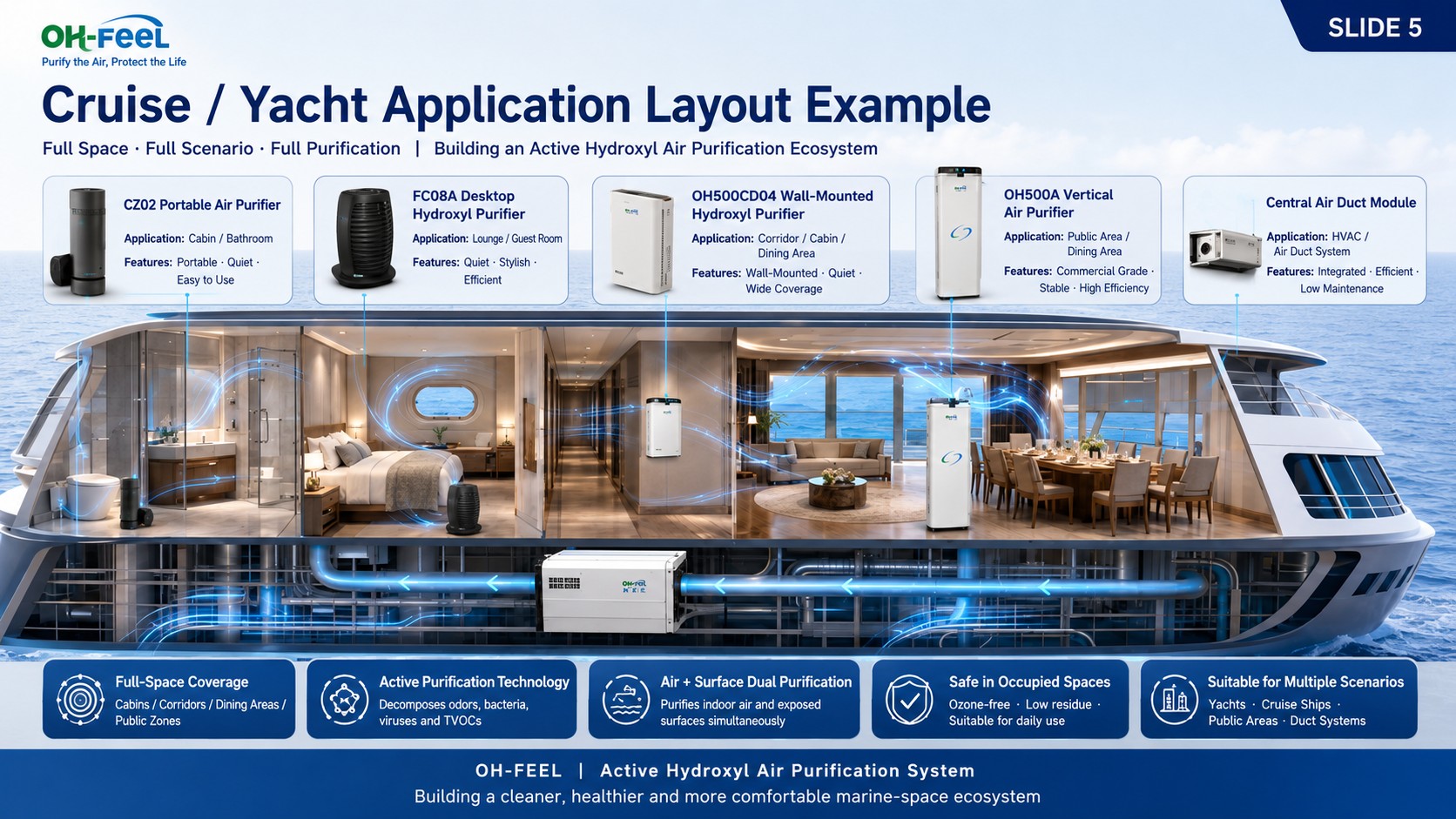
- Flexible deployment: portable, desktop, upright, wall/ceiling-mounted, and HVAC/duct-integrated configurations.
- Lower chemical dependence: reduces reliance on fragrance masking and temporary chemical deodorization.
- System integration: can work with fresh air, return air, ducts, sensors, and smart air-quality monitoring.
5. Recommended Application Scenarios
- Yacht cabins, owner cabins, and salons: control musty odor, damp smell, fabric odor, body odor, and stale enclosed air.
- Cruise guest rooms and VIP suites: support fresh, quiet, non-fragrance-based air management before check-in, during use, and after guest departure.
- Restrooms, wet zones, and sewage-adjacent areas: reduce recurring odors caused by humidity, drains, pipes, and stagnant corners.
- Restaurants, bars, galleys, and preparation areas: assist ventilation systems by reducing residual food, cooking, smoke, and waste odors.
- Corridors, elevators, theaters, gyms, and children's areas: support high-traffic public space air quality.
- HVAC and duct systems: transform air outlets and ducts from simple air-delivery points into air-treatment support nodes.
6. Product Configuration Logic
A practical marine solution can combine small-space devices, medium-room devices, large-space engineering units, and duct-integrated modules.
- CZ02: compact unit for cabins, bathrooms, and storage rooms.
- FC08A / QTV1: suitable for VIP rooms, salons, lounges, and medium spaces.
- OH500 / engineering models: suitable for restaurants, corridors, atriums, and public zones.
- Duct-integrated modules: suitable for HVAC coordination, return-air areas, and centralized air distribution zones.
7. Two-Stage Operation: Deep Treatment + Long-Term Maintenance
Stage 1: Deep treatment for 5–10 days. This is suitable for post-season reopening, renovation or refit, second-hand vessel delivery, odor complaints, or high-humidity remediation. The process includes on-site assessment, odor-source investigation, high-density equipment deployment, coordinated cleaning, and re-testing.
Stage 2: Long-term maintenance. After deep treatment, selected devices remain in key zones for continuous purification. Monthly inspections, quarterly deep cleaning, semi-annual HVAC checks, and annual air-health records help keep the vessel environment stable.
8. Smart Monitoring: Make Air Quality Visible and Manageable
For larger vessels or fleet operations, OH-FEEL solutions can be combined with air-quality monitoring. Key indicators may include TVOC, PM2.5, CO₂, temperature, humidity, equipment status, lifespan reminders, abnormal alerts, and maintenance logs.
This helps transform air-quality management from subjective perception into a measurable, traceable, and maintainable service standard.
9. Business Value for Operators
A cleaner cabin environment can help reduce odor complaints, improve guest confidence, enhance charter quality, and create a differentiated service label such as "Fresh Cabin Guarantee." For yacht charter companies, marinas, ship hotels, and cruise operators, active air treatment can become part of the premium guest experience and long-term maintenance strategy.
10. Conclusion
Cruise ships and yachts need more than temporary deodorization. They need a continuous air and surface health-management approach that fits enclosed, humid, high-experience marine environments.
OH-FEEL hydroxyl technology provides a flexible solution for cabins, public areas, wet zones, engineering spaces, and HVAC-connected areas — helping create cleaner, healthier, and odor-free premium marine spaces.